


AI Skills Are Becoming Policy Skills: What Future Civil Servants Need to Understand

For many years, artificial intelligence (AI) was seen as the domain of technical specialists - data scientists, analysts, and digital teams. For those interested in policy or the Civil Service, AI may have seemed important but somewhat separate from their work.
That is no longer the case.

AI is increasingly shaping how government operates, delivers services, and makes decisions. It is not just a technical issue; it is also a policy, ethics, and public service issue. Future Civil Servants do not need to become software engineers, but they do need to understand how AI influences decision-making, risk management, and public trust.
AI is not just about technology
A common misconception is that AI only matters for roles involving coding or data science. In reality, AI is already affecting many areas of government work. It can support research, summarise information, identify patterns, draft content, and improve efficiency.
However, its use raises important questions:
How do we ensure AI is used fairly?
How do we protect sensitive information?
How do we avoid bias?
How do we maintain accountability?
How do we explain AI-assisted decisions to the public?
These are not purely technical concerns—they are policy questions. As a result, AI literacy is becoming relevant across professions, including policy, communications, operations, legal, and strategy roles.
What this means for policy professionals
For policy professionals, understanding AI is less about mastering technical details and more about asking the right questions.
If AI is used in a service, policy professionals need to understand its purpose and limitations. If it supports decision-making, they must consider fairness, transparency, and public trust. Good policy work has always required judgement, and AI makes this even more important.
Policy professionals may not build AI systems, but they often advise on how they are used, who they affect, and what risks they create. Their role is to ensure that AI supports intended public outcomes and aligns with ethical standards.
AI can support delivery, but not replace judgement
AI has the potential to improve productivity in government by reducing administrative tasks, speeding up processes, and improving access to information. This can allow teams to focus on higher-value work.
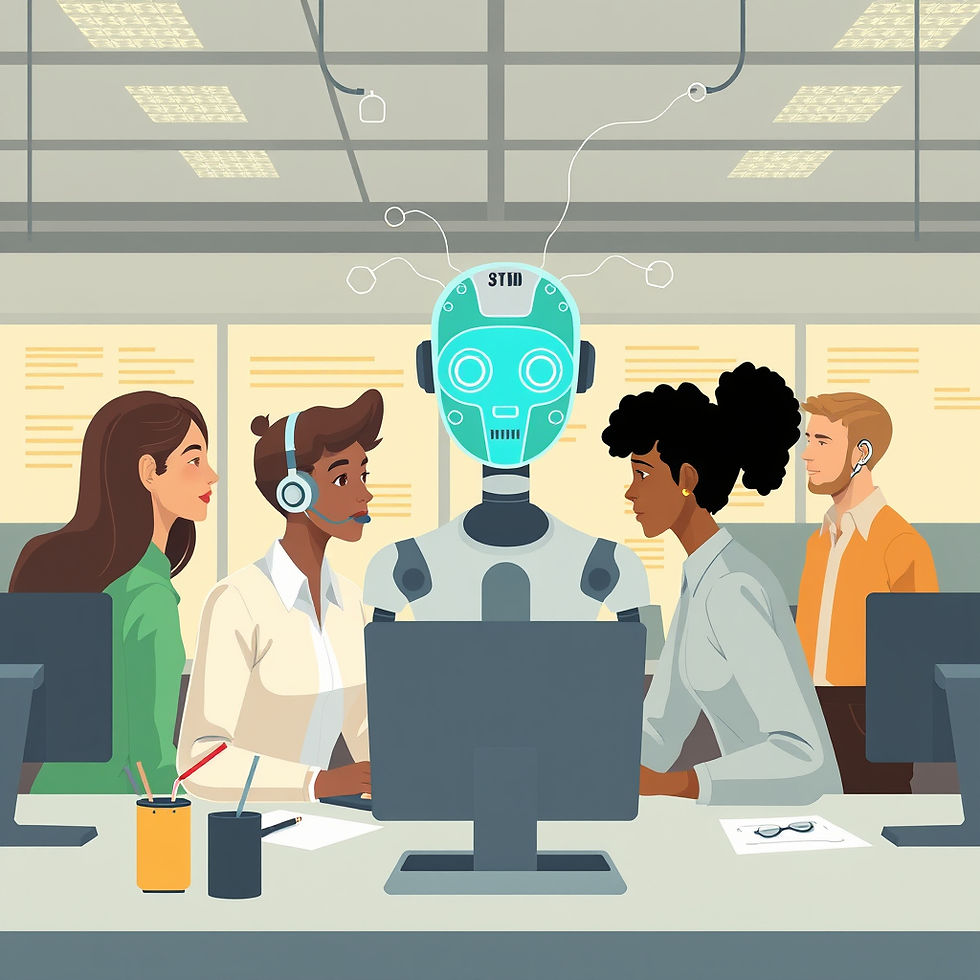
However, faster outputs do not always mean better outcomes. AI-generated information may not always be accurate, fair, or appropriate. Civil Servants must still evaluate outputs, understand their sources, and apply context.
This is especially important in public service, where decisions can affect people’s lives, rights, and trust in government. AI can assist work, but it does not remove responsibility for it.
The new transferable skill: responsible use
For those applying to the Civil Service, AI presents an opportunity to demonstrate a valuable skill: responsible use of technology.
You do not need to be an AI expert. Instead, you can show that you:
Use digital tools to improve processes
Critically evaluate information before relying on it
Identify risks in new approaches
Explain complex ideas clearly to non-specialists
Consider how decisions affect different groups
Balance efficiency with fairness and accountability
These skills align closely with how government approaches AI. The key is to demonstrate critical thinking, adaptability, and responsible decision-making.
Why this matters for access
AI also has implications for social mobility and access to public service careers. Those with greater exposure to professional environments may become familiar with AI more quickly, while others may feel excluded or assume it is not relevant to them.
This should not be the case.
AI literacy should not become another barrier. Aspiring Civil Servants should be supported to understand AI in simple terms - what it can do, its limitations, and how it affects public services.
The future of policy work should remain open to individuals from diverse backgrounds, including those without technical expertise but with strong skills in ethics, communication, and critical thinking.
How applicants can prepare
Applicants do not need to become AI specialists overnight. Instead, they should focus on demonstrating adaptability and awareness.

Start by building a basic understanding of how AI is used in government. Learn key concepts without relying on jargon. Consider both the opportunities and risks. Reflect on how AI connects to Civil Service behaviours such as Making Effective Decisions, Seeing the Big Picture, Delivering at Pace, and Communicating and Influencing.
Most importantly, remember that AI does not replace the need for strong public servants. It increases the demand for individuals who can think critically, communicate clearly, and prioritise the public interest.
The future policy professional
Future policy professionals will need to understand not only legislation and stakeholders but also how technology shapes decisions, services, and public trust.
AI skills are becoming policy skills because AI is becoming part of the policy environment.
For aspiring Civil Servants, this should not be intimidating. It is an opportunity to learn, adapt, and prepare for the future of public service.
You do not need to know everything about AI - but you do need to recognise that it is no longer someone else’s issue.



Comments